

Robin L.P. Blackstone, MD, FACS · August 2026
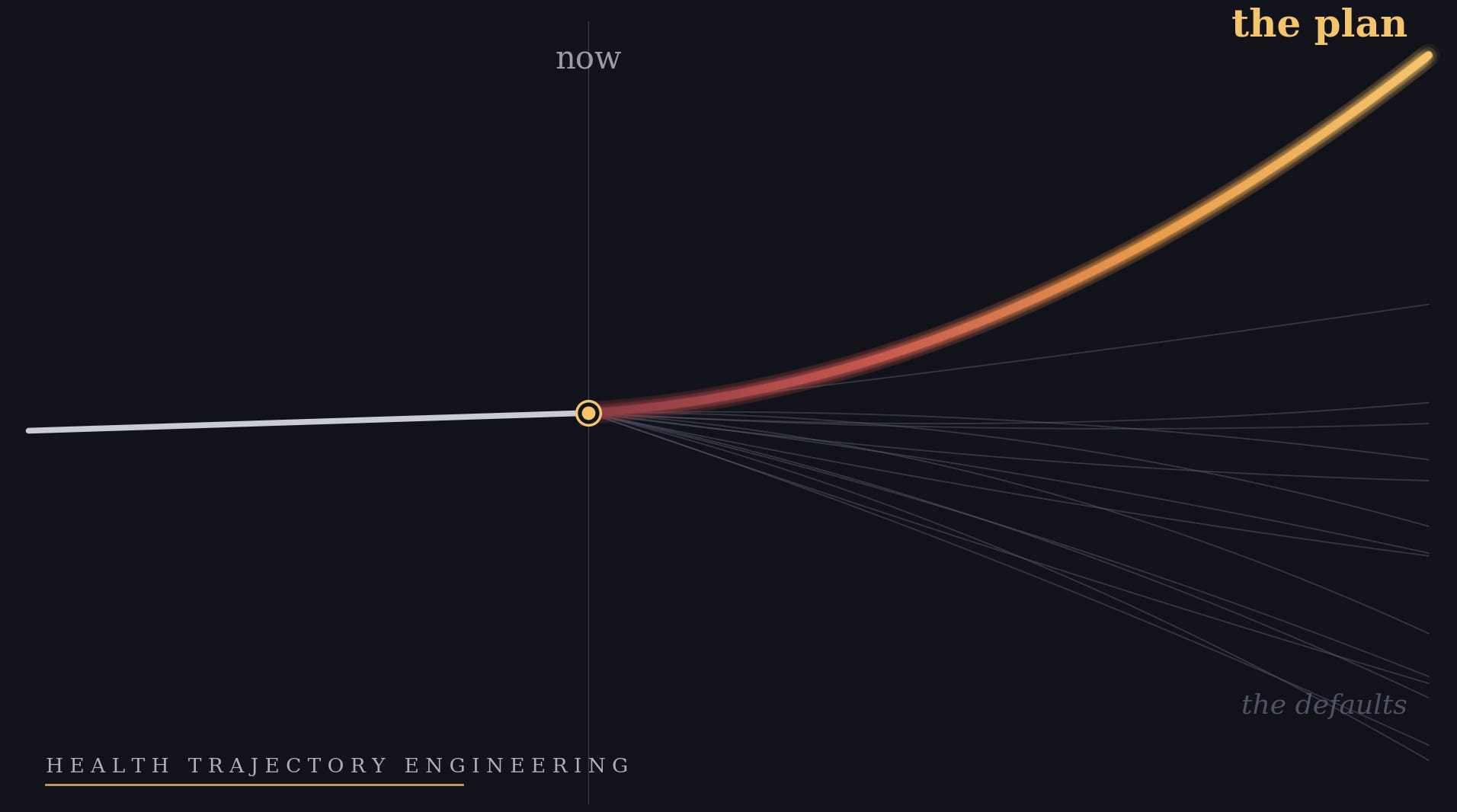
This week Bill Gates published the most important thing a technology optimist can write: a warning. His essay on the turbulent AI era argues that the transition ahead will be among the most disruptive in human history, that its benefits and harms are arriving simultaneously, and — the sentence that should be read twice — that there is “no plan to ease the entry into the AI era.”
He is right about the diagnosis. I am writing because, for health, he is no longer right about the plan.
The lag is the enemy, and the lag is a choice.
Gates observes that past transitions produced winners and losers. True — but incomplete in a way that matters. Every general-purpose technology has been both equalizer and injustice at once; which one dominated for whom was decided not by the technology but by the institutions that received it. Industrialization eventually raised living standards for nearly everyone — but only after two generations of stagnant wages that economic historians politely call a “pause,” borne by people who died before the gains arrived. The pattern repeats because the institutional response has always lagged the technology by decades. That lag is not physics. It is a decision civilizations keep making by default — and the entire question of the AI era is whether, for once, we build the receiving institutions at the same time as the technology.
Gates calls for exactly this: new coordinating institutions, national and international. His pessimism is that they require political consensus nowhere in sight, while competitive incentives push everyone to full speed. He names the trap honestly: whoever is cautious loses to whoever is not.
That trap is real — at the frontier, where capabilities are built. But it inverts at the layer where AI meets patients. In frontier development, caution is a tax. In clinical deployment, caution is the moat: regulatory clearance, liability, clinician acceptance, and above all patient trust mean the reckless deployer of medical AI doesn’t win the market — he produces the scandal that closes it, while the deployer who published its safety cases and answers to something other than shareholders becomes the one health systems dare to adopt. In medicine, being trustworthy is the competitive strategy. Which means health is the one arena where Gates’s institutions can be built now, by willing parties, without waiting for the consensus he doubts will come. That is what we have done.
What makes health different — and dangerous.
For all of history, the scarce input in medicine has been expert time. The physician-hour is why care costs what it costs here and why it barely exists in much of the world. Clinical AI converts that scarce input into software: for the first time, medical cognition can be copied at near-zero marginal cost. Universal medicine becomes economically possible in a way it never was — not as charity, but as arithmetic.
But zero marginal cost has never once guaranteed distribution in health. Oral rehydration therapy costs pennies and children still die for lack of it. Insulin is a century old and gets rationed in the richest country on earth. When a health good’s natural scarcity disappears, artificial scarcity gets constructed on top of it — patents, pricing, licensing — because someone’s business model requires the price and the cost to diverge. A shareholder-owned medical AI will follow that script within a decade of its founding, whatever its founders intend. And as this year’s dismantling of America’s vaccine infrastructure demonstrates, even a health commons with fifty years of proven universal distribution can be undone in a few political seasons if its governance can be captured. The lesson is not despair; it is a design specification.
The plan.
Over the past year I have published, open-access and DOI-registered, an architecture built to that specification — The Trajectory Engineering Papers and the companion book Doctor AI. In brief: health treated as an engineerable trajectory rather than a series of billable events; a system of care in which the AI is an accountable analytic layer and a human remains the moral agent (Gates proposes “Human Reserved” roles and offers a health example — delivering the news of an incurable disease; our architecture reserved that ground in print months ago, and made AI deployment conditional on safety and bias audits in every population panel it serves, before deployment, not after the damage); a financing architecture that ends the zero-sum logic in which prevented disease is lost revenue; and — the load-bearing choice — commons ownership. The clinical AI at the center of this architecture will be built and owned by a public-purpose trust with a non-amendable charter: no shareholder exists whose returns require artificial scarcity, no donor can buy governance, and the founder — me — holds no financial stake by design, with the disclosures published in every paper.
The plan is also deliberately refutable. It specifies three curves — cost, outcome, and trust — with dated falsification gates. If the curves do not cross their status-quo counterfactuals on schedule, the architecture fails and says so. A plan you cannot fail is a slogan.
Region Zero, not region only.
And this is a global health proposal, not an American one. The architecture designates the United States as Region Zero — the hardest test case, with its employer-based financing, legal fragmentation, and deep mistrust — on the logic that an architecture which works here has proven itself against maximum resistance. But the papers specify translation frameworks for every health system family on earth: Beveridge systems like the UK’s, Bismarck systems like Germany’s and Japan’s, mandatory-savings models like Singapore’s, and greenfield settings across the Global South. The greenfield case may matter most: where AI-era medicine arrives without an entrenched fee-for-service system to dismantle, the trajectory architecture can be built clean — which is why the field’s first international teaching site is planned for Nairobi, not New York. The moral arithmetic is simple: medical cognition at near-zero marginal cost matters most exactly where the doctors aren’t. Four and a half billion people lack access to essential health services. They are not an afterthought of this plan. They are its point.
The invitation.
None of this diminishes Gates’s essay; it answers its bleakest paragraph. He wishes for institutions and doubts the world will build them in time. In health — the sector where his own foundation has done its most consequential work, and the one where trustworthy deployment is the winning strategy rather than the losing one — the institutions are being built now: an academic home in formation, a governance trust already chartered, the scholarship public and open for any reader’s red pen, including his.
I present the framework at the University of Oxford on September 16. The papers are at doi.org/10.5281/zenodo.19791977 and on SSRN. Mr. Gates: the health chapter of the plan you called for has a draft. Come mark it up.
Robin L.P. Blackstone, MD, FACS is a surgeon and health systems architect; founder of Blackstone Health, the H4 Alliance, and the H4 Alliance Trust; and author of “Doctor AI: Reimagining Healthcare, Rebuilding Trust, Delivering Health 4.0” (2026). She holds no financial interest in the Trust or its assets; full disclosures appear in every paper of the series.
Also published in my LinkedIn newsletter, Architecting Future Health.
https://lnkd.in/p/gaAjhieV
Robin,
The most consequential part of this may not be Doctor AI itself. It is your decision to build the receiving institution and its governance at the same time as the intelligence.
That closely aligns with our work at YourHealthco. Both the H4 Alliance and YourHealthco use a Public Benefit Corporation because healthcare infrastructure cannot credibly place the patient first if its governance allows that purpose to become subordinate to financial returns.
The architectures then pursue different implementation paths. Health 4.0 pairs its Public Benefit Corporation with commons ownership and independent charitable-trust oversight. YourHealthco is pursuing a private-sector, provider-governed path: primary care as the organizing layer, one continuing care plan, transparent prices and funding before treatment, and independent providers paid at the point of care.
These may be complementary proofs rather than competing models. One asks how a health commons can protect universal intelligence. The other asks whether purpose bound private infrastructure can begin realigning clinical and financial decisions now, transaction by transaction.
Both recognize the same foundational truth: AI is not the architecture. Governance, incentives and human accountability determine what the intelligence ultimately serves.
Chris